Conversion and UX
Improve paid-media results with segmented landing pages
How device, location, timing, referral source and search intent can help you build more relevant landing pages and improve paid-traffic ROI.
Today, I'll show you how you can improve the results of your paid-media campaigns by segmenting your landing pages.
Bringing in the right visitor at the lowest possible cost is only half the battle when you're trying to get a good return on paid traffic. Your landing page needs to convert that visitor into money.
And one of the most overlooked strategies for increasing campaign conversion rates is segmentation: sending visitors to different landing pages based on a range of criteria.
I know. Plenty of people already do this to some extent. But believe me: very few truly explore segmentation's full potential.
So let's discuss some classic segmentation techniques, and some less common ones, that you can try to improve your paid-media ROI.
How segmentation helps
Before discussing the techniques, it's important to understand why landing-page segmentation is so effective at improving ROI that people who start doing it never go back, even when maintaining a large number of pages becomes a lot of work.
Understanding why it works will help you make better use of the techniques we'll discuss next.
1. You address each audience's objections more effectively
Imagine an estate agent trying to sell a particular house with exactly the same pitch to every lead: young couples, families with children, investors, widows...
That wouldn't make much sense, would it?
When speaking to a family with children, you'd want to focus on things such as how close the house is to schools or how much space there is for children to play.
With an investor, you'd probably do better by highlighting the area's economic growth or the range of people who might want to live in the house in the future.
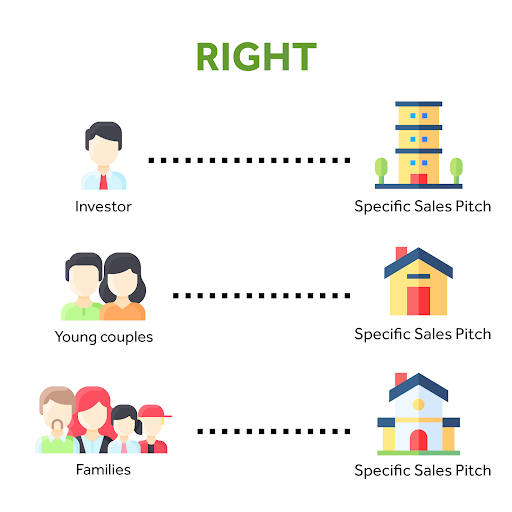
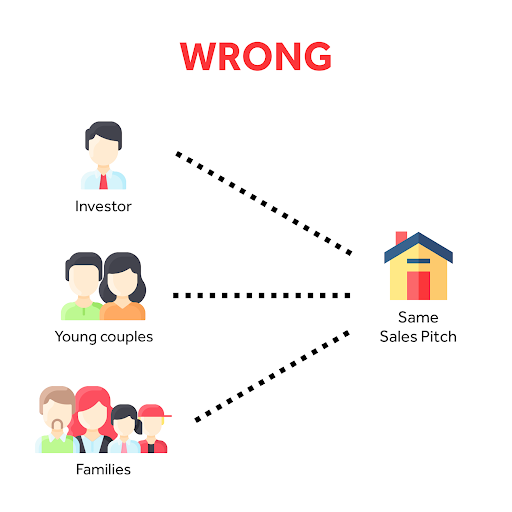
The same thing happens online.
Even highly specific products have different audiences with different problems, objections and goals.
You shouldn't try to squeeze everyone onto one landing page with an "average" sales pitch for everybody. Build pages that focus on each audience's particular situation.
2. You gain more control over retargeting campaigns
If you send different audiences to different landing pages, you can easily set up specific retargeting pixels or rules for each page. That also lets you segment your remarketing campaigns, giving you the ability to show more relevant, specific ads to each audience.
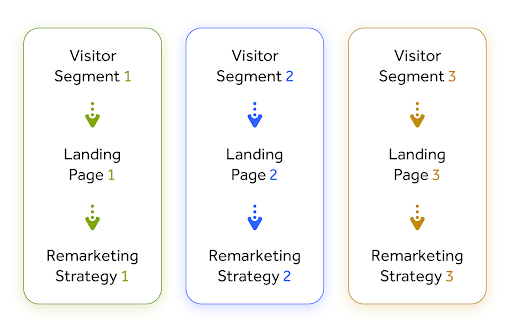
Retargeting is such an important part of a good paid-traffic strategy that you shouldn't underestimate this benefit.
3. You improve your Quality Score
Once your landing pages become more relevant to visitors, you'll notice, for several different reasons, that your Google Quality Score improves.
That means paying less for the same visitors and gaining more visibility for your ads.
Segmentation techniques based on user data
Device
Let's start with a basic but very important segmentation question: is your user on mobile or desktop?
Depending on your market, user behaviour can be completely different across those devices. Even the definition of your main metric can vary considerably.
Let's use Airbnb as an example.
On desktop, it's reasonable to assume a user's goal is the traditional one: finding somewhere to stay on their next trip, right?
In that case, a typical Airbnb ad inviting users to book accommodation would make perfect sense, as shown below. I carried out this research using Google in the US:
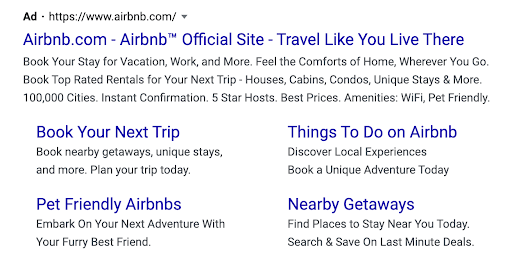
On mobile, things may not be so obvious. Some Airbnb services are particularly relevant to users on the move, using their phones.
For instance, someone on holiday is more likely to be interested in booking an Airbnb experience available today near where they're staying.
Or perhaps an offer to rent out their own home while they travel might appeal to them. Could that be why this option only appears in the mobile ad below?
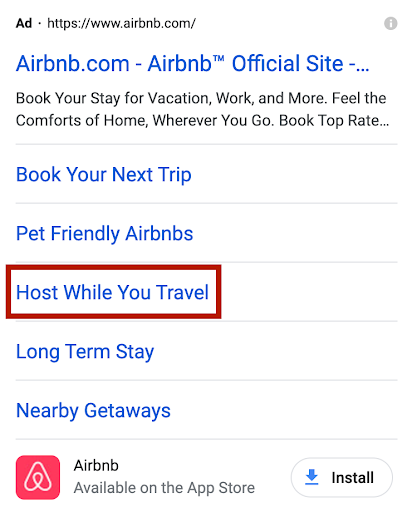
And of course, installing the app, shown at the bottom of the ad, is an important mobile conversion that doesn't make sense on desktop. That alone would justify completely different traffic acquisition and conversion strategies for desktop and mobile.
Besides considering a different primary conversion, when building landing pages for mobile traffic, you should also think about page length.
Which brings us to the familiar question: should the page be shorter than the desktop version?
I'm not saying shorter pages always work better on mobile. That's nothing more than a myth. I've seen pages of every possible length succeed and fail on both mobile and desktop.
But one thing is certain: in many industries, mobile users tend to be in more of a hurry than desktop users. Think about car hire, for example. A mobile user might be visiting your site from an airport, trying to get a car and leave as quickly as possible.
For this kind of user, get straight to the point. Address whatever objections need addressing quickly, and make converting as easy as possible.
The good news is that a solid landing-page segmentation strategy makes this "minimalism" easier to achieve. With a page for each audience, you can include only what is really relevant to that audience. You don't need to try to be perfect for everyone by talking a little about everything.
Location
For most businesses, the location from which a user visits the site is a key factor.
Think, for example, about the many ways major retailers might need to treat users from different cities differently.
Among other things, their websites could dynamically highlight products with free delivery to the visitor's region.
Better still, they could identify different buying trends among people in different cities. What interests people in Rio de Janeiro right now may be different from what's happening in Fortaleza.
But an even more interesting variable has a strong influence on those regional trends: the weather.
By combining location and weather, many businesses can create powerful segments. After all, what users want changes considerably depending on the weather wherever they are at the time.
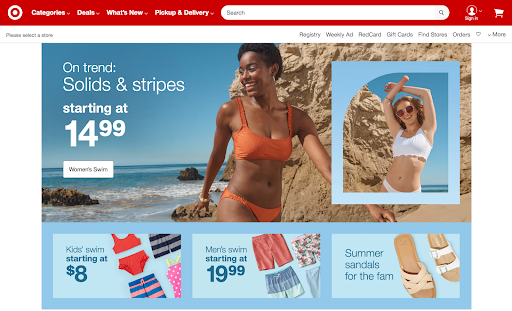
It's hot in the US...
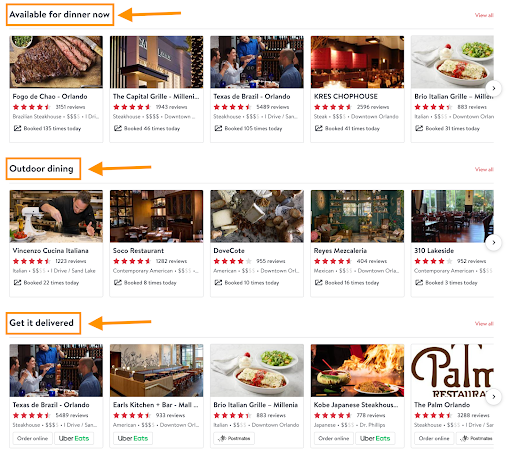
...while it's cold in Brazil.
Obvious, right? Yet the vast majority of companies have never used the combination of weather and location to segment their audiences.
Time of day
A user's needs can also change dramatically over the course of a single day.
Imagine how important that is for Uber Eats campaign landing pages, for example.
At 7 am, you could use an appealing design with breakfast-related visuals, alongside a list of nearby restaurants and bakeries known for their breakfasts.
By around 6 pm, you'd probably get a higher conversion rate by sending visitors to a different landing page, such as one from OpenTable.
Time of day is also an excellent variable to combine with location and weather. In the OpenTable example, if we know it's raining, perhaps we could send users to a landing page without the "Outdoor Dining" row. Or at least make it less prominent by placing it below the row of restaurants offering delivery.
Referral source
You can learn a lot about users by carefully analysing where they came from: the pages or websites that referred them.
Let's imagine visitors coming from blog posts, for example.
I constantly hear companies complain that their blogs' conversion rates are much worse than those of the rest of their websites.
As frustrating as that may be, it's perfectly normal. People reading blog posts are in what I call "reading mode". They're generally not looking to buy anything right now. They just want to read and learn.
That's why you should test segmenting users who come from blogs in your display campaigns.
Send them to more content-focused pages with lower-commitment conversions, such as joining an email list rather than buying something. That will better align your message with their context and "reading mode", potentially improving your overall results.
Segmentation techniques based on keywords
One piece of information available specifically in search-ad campaigns is extremely valuable for sending users to different landing pages: their search query.
Seer Interactive founder and my friend Wil Reynolds often demonstrates how much Google has learned about every little detail of users' intentions, mainly from what they type into the search box: the keyword.
The good news is that you don't have to be Google to start applying intelligent keyword-based segmentation. Here are some ideas:
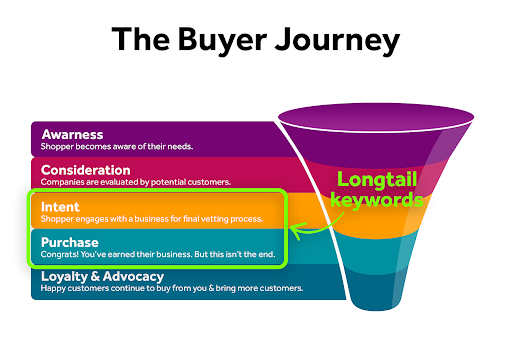
Stage in the buying journey
Keywords tell you a lot about where someone is in the buying journey. How much they know about the market, how aware they are of their real problem, how ready they are to buy...
Don't miss this opportunity to adapt your landing pages accordingly.
If someone uses a more generic search term, they're probably taking their first steps in the buying journey.
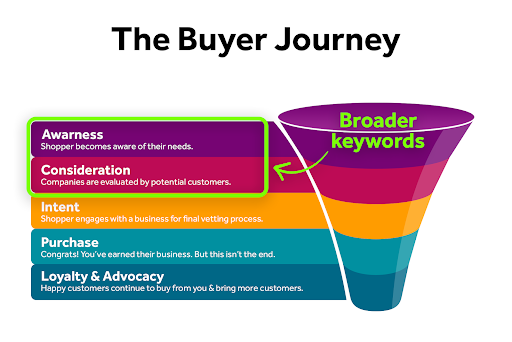
Let's use the email-marketing tools market as an example of a buying journey.
Someone using a generic term like... hmm... "email marketing" probably doesn't know exactly what they want yet and is just starting to explore the topic.
For these users, you could test pages with some of the following approaches:
Start by highlighting your unique value proposition. It may be too early to get into the details. First, explain how you'll make their lives better overall. Here's a good example from Constant Contact:
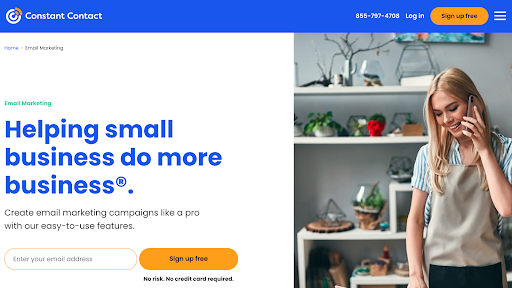
Early in the journey, users are more reluctant to make big commitments. So test offering a lower-commitment conversion, such as watching a demo, starting a free trial without providing a credit card, or receiving high-quality content.
When trying to convert these top-of-funnel users, test asking for information that will be useful in future communications with them, whether through retargeting, email, notifications or other channels. Think about what information makes sense for your business. Company size? Revenue? Sex? Age? Remember, segmentation is a powerful tool for your marketing as a whole, not just landing pages. This kind of first-party information, provided directly by users, is what fuels genuinely good segmentation strategies.
But when users make more detailed searches, you need to change your approach.
Staying with email marketing, let's say someone searches for "email marketing tool with the best deliverability".
This user is much more informed. Just from the keyword, we know they've done their homework. They've studied how email marketing works, analysed the main features and identified deliverability, a tool's ability to get emails into recipients' inboxes, as their main concern. They're clearly further along in the buying journey.
Generic value propositions may not be the best tactic here. Focus on the problem the user has made clear in the keyword "email marketing tool with the best deliverability", as this SendGrid landing page does:
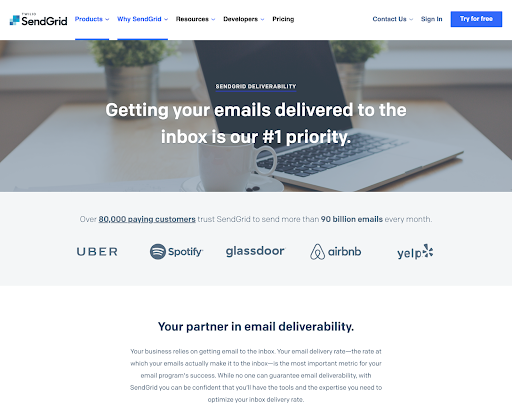
You can also test changing your offer. Instead of trying a lower-commitment conversion, perhaps it makes more sense to offer something that creates urgency, such as a discount for buying in the next 24 hours. After all, this user may be ready to make a decision. A small nudge could be enough.
Product feature
People can be interested in the same product for very different reasons. Someone might want a Tesla because they believe it will help the planet. Someone else might want one because of all the innovative technology in the car.
Some keywords make it very easy to understand which product feature interests a person. To be relevant, build your entire sales pitch around that feature.
Let's look at what the well-known design tool Figma could do with this strategy.
If someone searches for "design tool for collaboration", why should Figma send them to a generic landing page that gives all its features equal importance?
Wouldn't it make far more sense to send them to a landing page like this one?
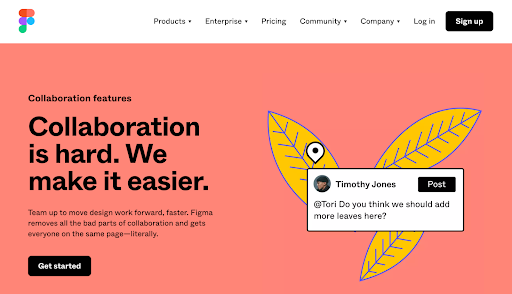
The page quickly shows that Figma has what the user wants: collaboration features. That's crucial to stopping them from leaving immediately. Other features could be mentioned further down the page, but the sales pitch is built around the feature the user is looking for.
The same strategy should apply to other features people search for, such as "prototyping tool":
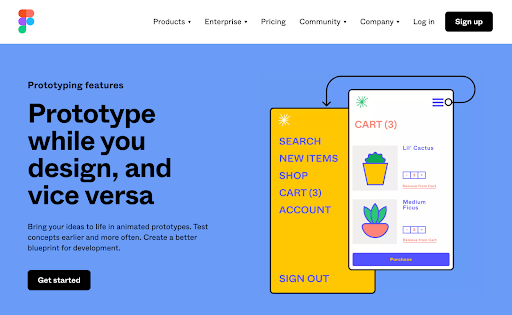
Remember: most of the time, good landing pages should do what good salespeople do. And one of the things good salespeople do is adapt their pitches to better match a prospective customer's interests.
Get as granular as you can
Segment as much as you can. More is always better. This is particularly true of keyword segmentation.
Of course, prioritise segmenting traffic from keywords with the strongest traffic numbers and conversion potential.
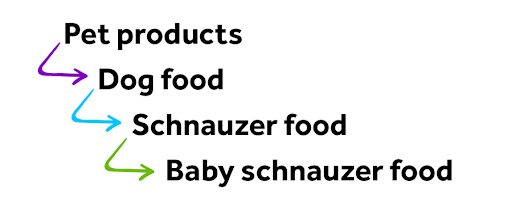
But keep getting more specific. Always consider how you can segment your traffic one level further.
For example, if you sell pet products, you could increase granularity by building landing pages that follow a keyword sequence like this:
How to get started with segmentation
If you currently do no segmentation at all, this article might feel a little intimidating. But remember: you don't have to do everything at once.
Start with some basic customisations based on device, location or your main keywords.
There are many tools that can help you move faster at a reasonable price.
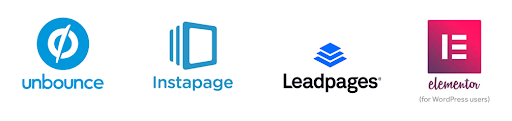
For example, if you want to create new pages for your segments, here's a list of good page builders that don't require advanced programming knowledge:
Another approach is to personalise your existing pages, making changes based on user information such as referral source, device, keyword and many other variables.
One great personalisation tool is Google Optimize. It has a free plan, integrates easily with other Google products and offers a powerful set of personalisation rules. See for yourself:
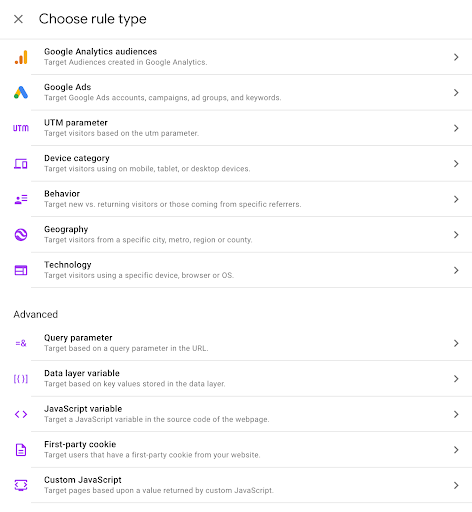
You can create personalised experiences for practically any user segment you can imagine.
Don't wait to get started
Your competitors won't. Segmentation and personalisation are hot topics for many companies looking for ways to improve conversion rates.
Look at the audience in the photo below, when I showed a slide with segmentation ideas during my talk at the most recent RD Summit:
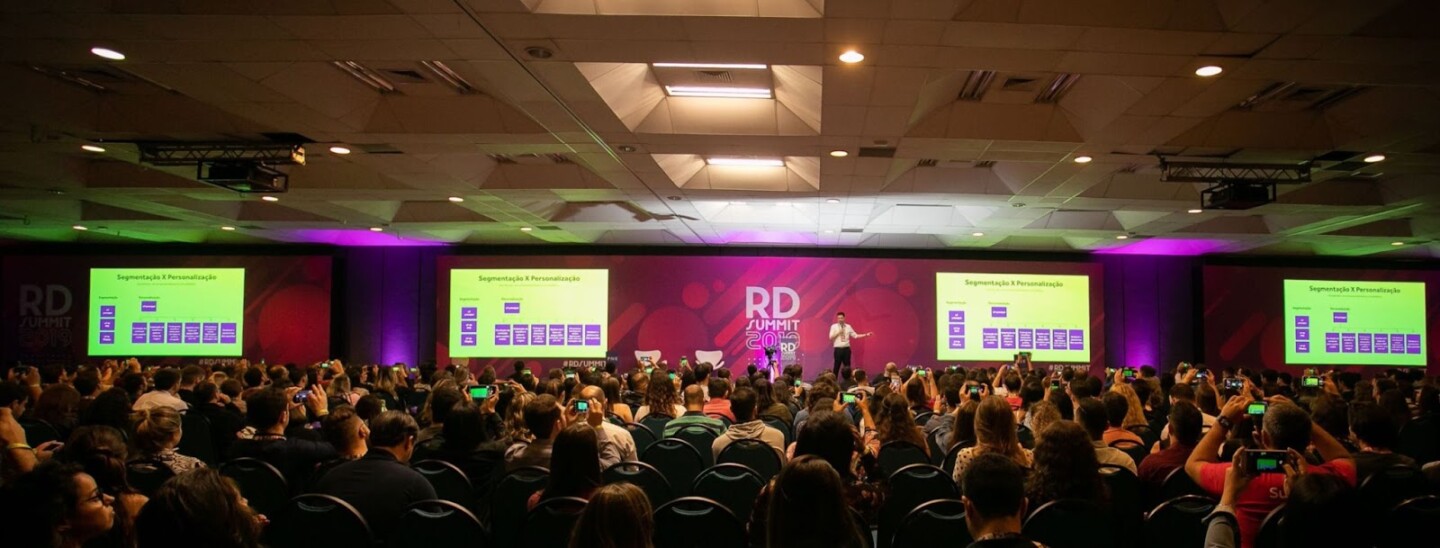
I'd love to be such an exciting speaker that this many people held up their phones to photograph every slide. But that isn't the case.
It happened because they're trying to explore segmentation and personalisation.
So no, you don't have to become brilliant at personalisation overnight. But don't wait too long to begin.