Leadership
How we made a remote company a Great Place to Work
The practices behind Supersonic’s remote culture, a Trust Index of 94 and almost zero turnover over five years, in this account originally published in 2018.
Originally published in 2018.
Creating a good working environment has always been a major challenge for any company.
But when we decided, five years ago, that Supersonic would be fully remote from day one, we knew we'd face an even bigger challenge in creating that environment.
Almost all the literature on good organisational culture and team satisfaction focuses on "normal" companies, with physical offices and colleagues meeting every day.
So we had to make our own rules to turn Supersonic into a good "place" to work for the talented people we wanted to attract and retain.
Starting from scratch and on our own, we had to rack our brains countless times to succeed in this mission, and we still do. But recently, we received a sign that all this dedication is paying off.
We took part in Great Place to Work for the first time, an assessment that evaluates whether companies are... a great place to work. We earned certification with a Trust Index of 94, which we're told is a VERY big deal.
I know several companies that are moving, or would like to move, to remote work but still feel uncertain. So I decided to write this post about the Supersonic culture practices I consider most important in becoming a Great Place to Work and achieving things such as almost ZERO turnover in five years, with a team of more than 20 people.
After reading this article, you'll see that remote companies can have working environments and cultures as good as, or better than, companies with physical offices.
It's also important to emphasise that most of the practices below apply to any kind of company. They're framed around remote work simply because that's how we implemented them at Supersonic. Even if you have no plans to go remote, you may find useful advice here.
With that said, shall we begin?
Trust your team
A classic fear among managers who've never worked remotely: "How do I make sure my team isn't spending all day on YouTube or arguing about politics instead of working?"
Here's the reality: if your employee would really spend all day on YouTube instead of working at home, they're very probably already doing it in the office. That's what ALT+TAB is for.
A high-performing remote team does need a high degree of mutual trust, just like an office-based team.
If you try to micromanage every activity, taking regular screenshots of people's screens, supervising every tiny deliverable and demanding detailed reports of every minute worked, you won't create a healthy environment. Your culture will sink into mediocrity.
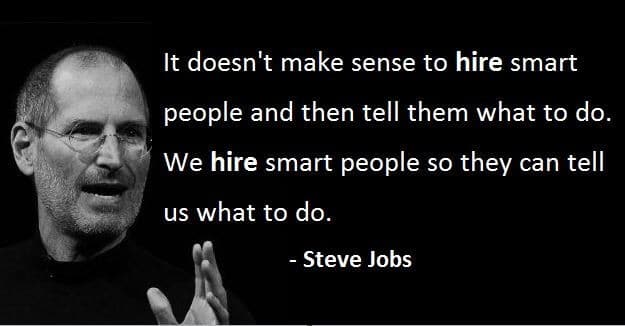
Micromanagement is a cancer that must be avoided. You can't, and shouldn't try to, control everything your team does all the time. After all, as Steve Jobs said:
If you don't trust your team enough to let them work remotely, the problem lies with your team, with you, or with both. It doesn't lie with the remote model.
Make goals and deadlines very clear
This is the best way we know to avoid having to micromanage anyone.
Make it absolutely clear what each person needs to do and when it needs to be ready.
That isn't always easy. But if you do it properly, you won't have to worry about "forcing" your team to work at least 8 hours a day. Your sole focus will be achieving goals within the agreed deadlines.
At Supersonic, we currently use two kinds of goals:
Weekly goals: similar to Scrum sprints, these are usually more operational goals, organised and defined by the team together with the project managers at the beginning of each week.
Quarterly goals: these focus on more strategic topics. We use the OKR methodology, where each team member decides how they'll help the company achieve the objectives announced at the beginning of each quarter.
As long as someone meets their goals within the agreed deadlines and to our quality standards, everything is fine.
Besides bringing peace of mind, this mindset helps you objectively evaluate who most deserves a newly opened management role, or whether someone requesting a raise is really earning it.
Be obsessive about processes and documentation
To be productive remotely, everyone needs to be able to do as much work as possible without asking someone else for help.
After all, one of remote work's wonders is the ability to focus properly on what needs doing, without unnecessary interruptions every five minutes or meetings that could have been emails.
But for that to work, everyone needs to know very clearly what to do and how to do it.
At Supersonic, we try to give our internal processes and documents as much attention and visibility as possible, so they guide each person through their daily responsibilities.
Creating efficient processes and keeping documentation up to date isn't easy. But think about all the interruptions from calls, emails and Slack messages that no longer happen because of it, and you'll see it's very worthwhile.
Remember, too: just like a website's conversion rate, a company's processes can always improve. That's why we're obsessive about continuously optimising them.
Give employees an excellent onboarding experience
Welcoming new employees effectively is already challenging in "normal" companies. In remote companies, it's the same challenge on hard mode.
The first thing you need when hiring someone is what we discussed above: clear processes and up-to-date documentation. These are essential to helping a new colleague understand what's expected and how to tackle everyday challenges.
Of course, that isn't enough on its own.
Whenever a new person joins Supersonic, we create a priority project in Basecamp, with tasks involving several areas of the company and the new colleague, to help them settle in fully as quickly as possible.
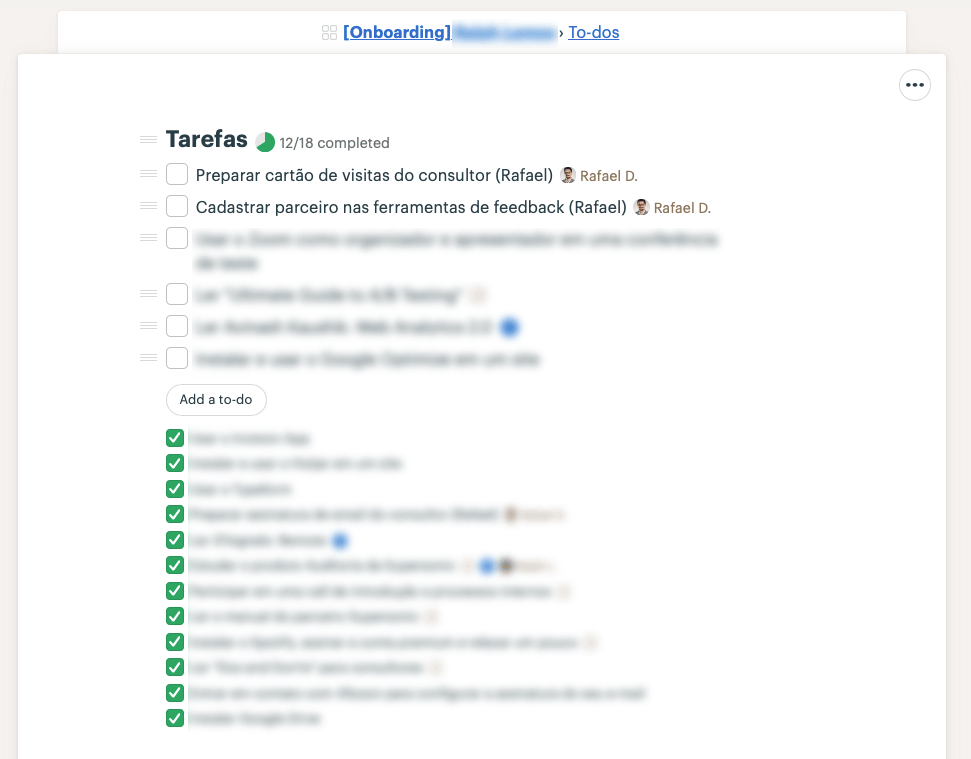
A series of tasks is generated automatically to give every team member the best possible onboarding experience.
Don't overlook the less tangible details here. We're all still human beings when we work remotely. Ask yourself: how would you like to be welcomed into a new job? Your answer will suggest some "soft" activities that matter just as much as completing the person's employment paperwork correctly.
Keep good professionals motivated with bigger challenges
Do you worry that working remotely will make an employee less engaged with the company and more likely to spend their time on other things?
The best way to avoid that is to keep them motivated. And in my opinion, the best way to motivate good professionals is through bigger challenges.
If you can't offer increasingly interesting work to someone developing within your team, you'll naturally lose that person. After all, growing talent has no shortage of opportunities.
Of course, there needs to be a plan for compensation to keep pace with that development. But compensation alone isn't enough.
We work every day to give people at Supersonic who want to develop the chance to "test themselves" on progressively harder projects. Today, one of the people working on some of our most complex US-market projects started at the company as an intern.
We also try to reward results tangibly, with more than a pat on the back. We pay bonuses for several situations, including increases in clients' conversion rates, renewals from satisfied clients, individual performance throughout the year and profit sharing.
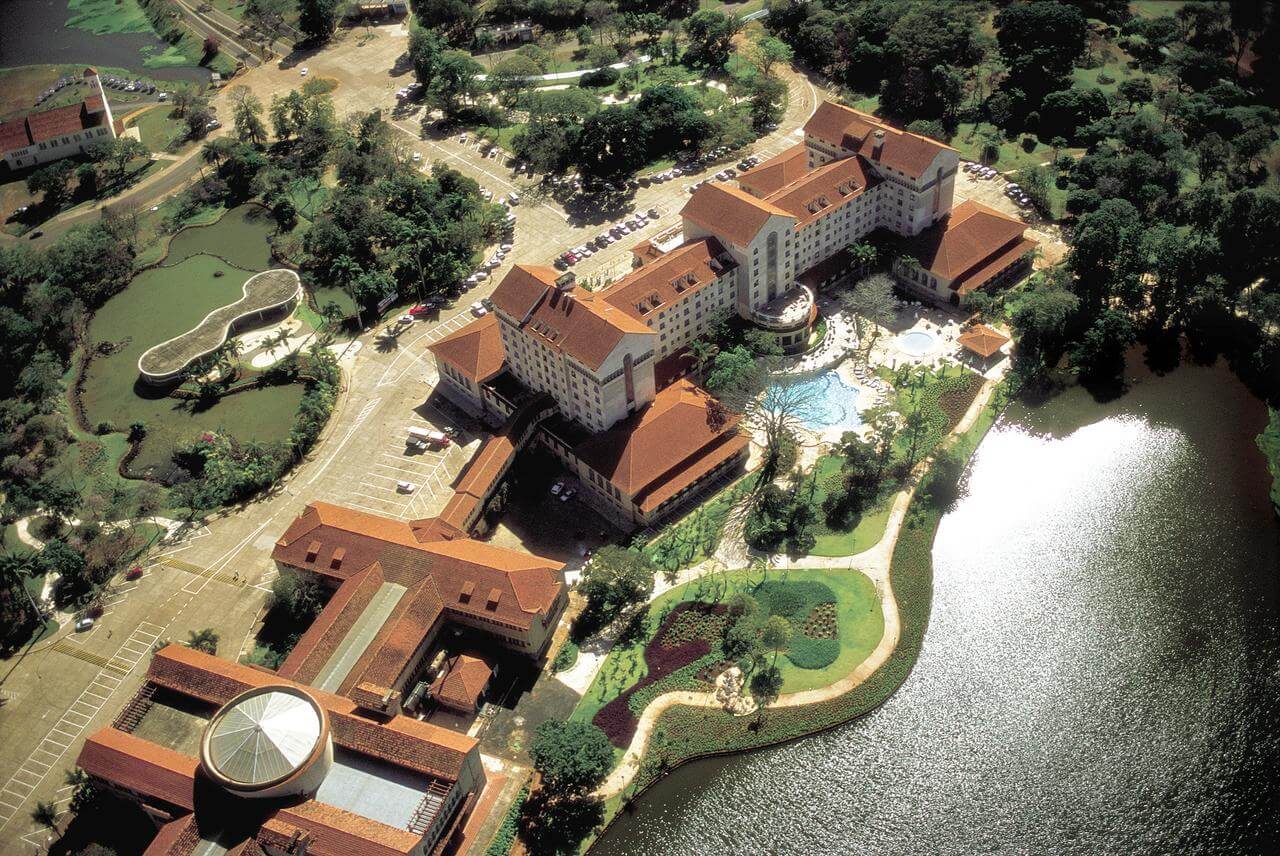
One of our performance rewards sent a team member and a companion to this resort.
Encourage feedback
Getting 100% honest feedback from your team is difficult in person, and even harder remotely.
But without feedback, you'll struggle to understand where you're going wrong and which course corrections would best help you become a good place to work.
You need to be proactive and continually encourage feedback.
At Supersonic, we do this through measures such as:
- Leading by example. Leaders work to give clear feedback to anyone, whether positive or negative.
- Quarterly internal surveys using Tracksale.
- Weekly "Cheers". We created this practice so anyone on the team can send congratulations, a "cheer", to someone they feel deserves it for something they did that week. We introduced Cheers years ago, and engagement remains high.
- One-to-one meetings without a fixed agenda, where any topic relevant to the company or the employee can be discussed openly.
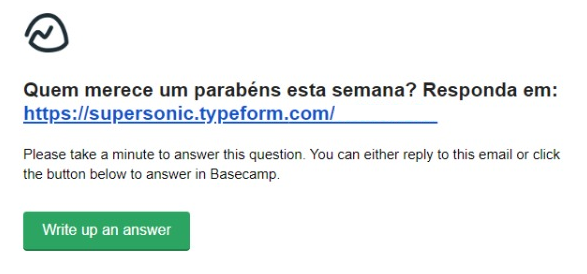
An example of the weekly email the entire Supersonic team receives.
Don't skimp on tools
The remote model saves money on things such as office rent, maintenance and transport. But don't get too excited about those savings, because there's an additional cost you can't ignore: software.
To create the right working conditions, we invest what we can in various kinds of software. Project management, file organisation and sharing, video conferencing, internal communication... It's a long list.
Many of these tools are also excellent for office-based work. In the remote model, though, they're indispensable. Make that investment so your team can perform at its best.
Only hire people who demonstrate self-discipline and organisation
As I've said, great remote workplaces are incompatible with micromanagement. You need to trust your team.
But the only way to avoid having that trust disappointed is to build a team of people who clearly demonstrate a good level of self-discipline and organisation.
It's true that remote workers are surrounded by distractions: TV, video games, household chores and so on. People who can't manage themselves will frequently make poor choices, hurting both themselves and the company.
The same applies to organising their work. People need to be proactive about deciding how to work well remotely. Anyone who lacks that maturity will quickly become a source of accumulated problems.
Make it a major priority in interviews to assess candidates' ability to manage themselves and stay organised without needing a babysitter.
Every time you compromise on this because you "liked the candidate", you'll pay for it.
Encourage diversity
Diversity, whether cultural, ethnic, gender, religious or any other kind, is an enormous advantage for any business.
We serve companies that are completely different from one another, with even more varied audiences. Having a team that's diverse in several ways gives us empathy, self-organisation and a better understanding of so many different situations.
Embracing and encouraging diversity in your team is simply the right thing to do to build a better world. But anyone who isn't sufficiently motivated by that and ignores diversity is also making a strategic mistake. They're putting themselves at a serious disadvantage in an increasingly multifaceted world.
In-person contact still matters
Just because a company works well remotely doesn't mean it shouldn't encourage team members to meet in person periodically. Quite the opposite.
Since Supersonic began, we've brought the whole team together in December to celebrate the year that's ending and discuss the direction for the years ahead.
Those first meetings were so positive that we've already moved from annual gatherings to meeting twice a year.
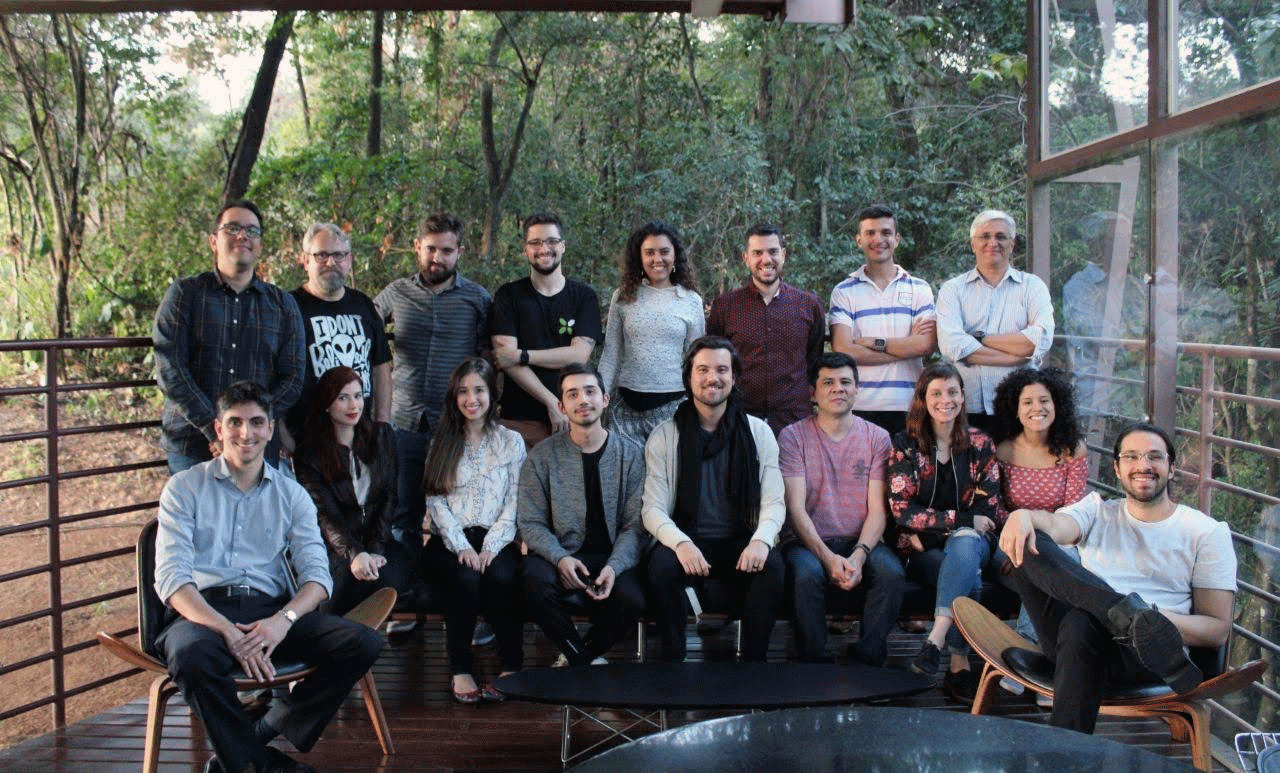
One of our twice-yearly gatherings.
We also have our own space in Belo Horizonte, where team members in the city can meet regularly to discuss projects and work through tasks together.
Every two weeks, those who can attend also spend an afternoon there sharing knowledge through a series of internal presentations we call "Masters Supersonic".
Give serious consideration to regular in-person gatherings for your team. They won't take away any of remote work's many benefits, and they'll contribute enormously to creating a great place to work.